Sauna Benefits: What the Research Actually Says
Search for sauna benefits and you will find a great deal of confident writing. Detoxification. Weight loss. Immune boosting. Much of it is written by companies selling saunas.
We sell saunas. So take what follows in that light, and notice what we are careful not to claim.
This article is about three things: what people consistently report, what researchers are genuinely investigating, and what you should be sceptical of. If you are looking for someone to promise you a health outcome, we are going to disappoint you.
First, the honest frame
A sauna is not a medical device. Nothing here is medical advice, and none of it is a substitute for talking to your doctor.
Most of the research on sauna bathing is observational. That means researchers followed groups of people, mostly in Finland where sauna use is ordinary and lifelong, and looked for patterns between how often they used a sauna and their health over time.
Observational research can show that two things travel together. It cannot show that one causes the other. People who use a sauna four times a week may also be people with the time, health and money to do so, and those things affect outcomes on their own. Good researchers try to account for this. It is still not the same as proof.
So when you read that sauna use is "linked to" or "associated with" something, that wording is doing real work. It is not a synonym for "causes".
What people consistently report
This is the least scientific part of the article and, honestly, the part that most owners care about.
They sleep better. Easily the most common thing we hear. A hot session in the evening, followed by the body cooling down, is a routine many people find helps them wind down.
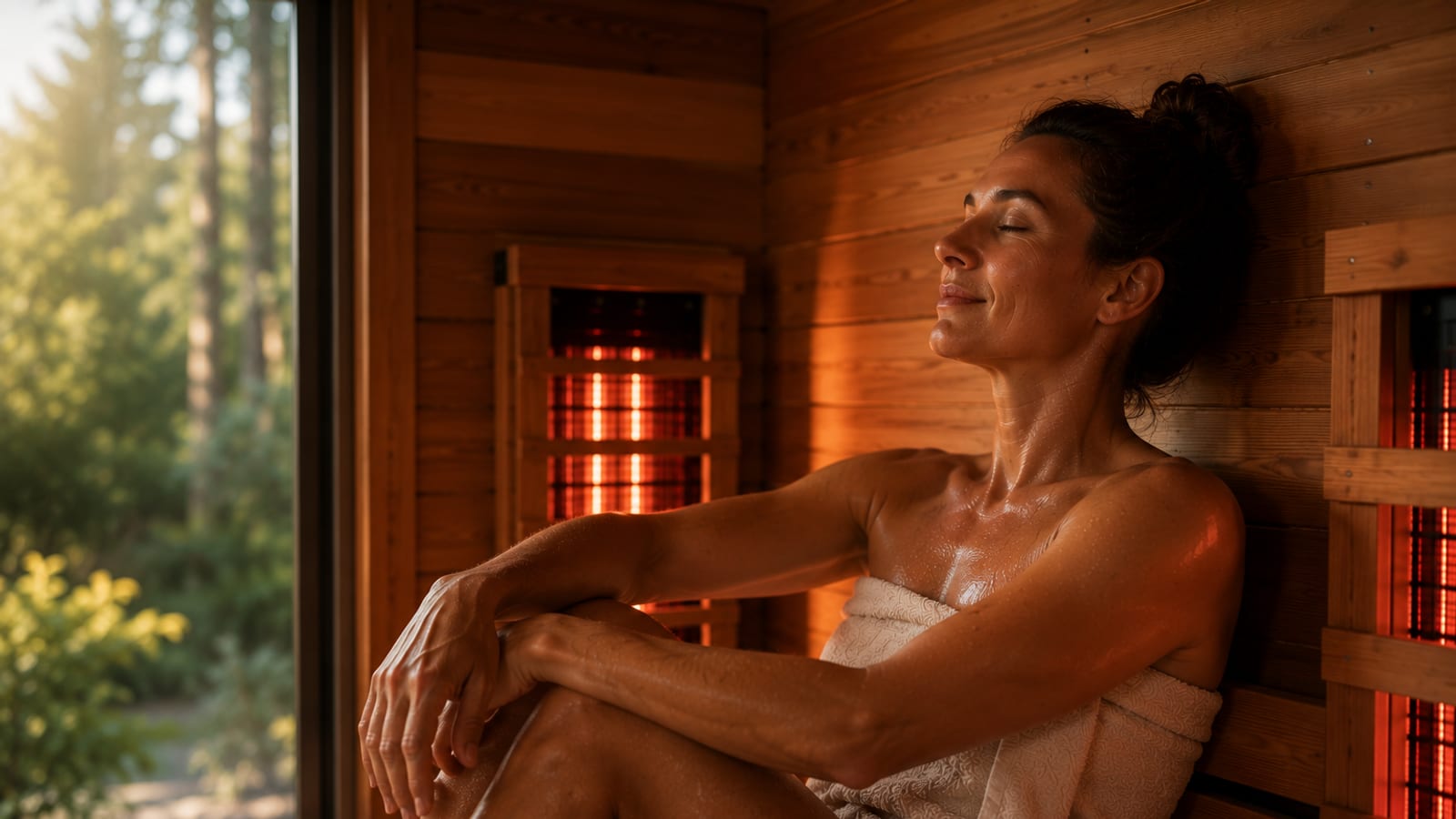
They feel less tense afterwards. Sitting in heat with no phone for twenty minutes is, in itself, one of the few times in a modern day when nothing is asked of you. Some of the effect is physiological, some of it is simply that you stopped.
Sore muscles feel easier. Popular with people who train. Whether heat meaningfully speeds recovery or mainly makes the soreness more tolerable is still argued about.
It becomes a ritual. The thing owners describe most often after a year is not a health outcome, it is that it became part of how their week works. That matters more than it sounds: a sauna you use is worth more than a better sauna you don't.
None of this is evidence. It is what people say, and we would rather report it as what it is.
What researchers are actually investigating
The largest body of work comes from long-running Finnish population studies, where sauna use is common enough across a whole population to study over decades.
The areas under investigation include:
Cardiovascular outcomes. This is the most studied area. Heat exposure raises heart rate and dilates blood vessels, and researchers have looked at whether regular exposure relates to blood pressure and cardiovascular events over the long term. Findings have been reported as associations, in specific populations, and are not settled.
Blood pressure. Sauna use produces a short-term drop in blood pressure as vessels dilate. Whether repeated exposure produces a lasting change is a separate and less certain question.
Recovery and inflammation. Studied in athletic contexts, with mixed and generally small studies.
Perceived stress and sleep. Harder to measure, more dependent on self-reporting, and correspondingly weaker evidence.
What you should take from this: it is a real and active field, the direction of the findings is broadly encouraging, and none of it justifies a promise on a product page.
What we will not claim, and why
"Detox". Sweat is overwhelmingly water and electrolytes. Your liver and kidneys handle detoxification. The idea that you sweat out toxins in any meaningful quantity is not supported, and it is the single most common overclaim in this industry.
Weight loss. You lose water weight in a sauna and you regain it when you drink. Anyone selling a sauna as a weight-loss device is selling you something else.
Immune boosting. A vague phrase that sounds medical and means nothing specific.
Curing or treating any condition. A sauna is not a treatment. If a seller tells you otherwise, that tells you what kind of seller they are.
We would rather you buy a sauna because you will enjoy using it several times a week. That is a good enough reason, and it is one we can stand behind.
Who should be careful
This part matters more than the benefits, so please do not skim it.
Talk to your doctor before using a sauna if you:
- have any heart condition, including arrhythmia, or have had a heart attack
- have low or unstable blood pressure
- are pregnant, or think you might be
- take medication affecting blood pressure, heart rate, fluid balance or your ability to regulate heat
- have a condition affecting how you sense heat, including some forms of neuropathy
- are recovering from illness or surgery
For everyone, regardless of health:
- Do not drink alcohol before or during. This is the one rule that turns up repeatedly in accounts of sauna-related incidents. Alcohol and heat both affect blood pressure and both impair your judgement about when to get out.
- Drink water before and after.
- Start short. Ten to fifteen minutes is plenty at first. Long sessions are not a sign of toughness.
- Get out when you feel like getting out. Dizziness, nausea or a headache mean stop, now, not in five minutes.
- Never let children use one unsupervised, and keep their sessions much shorter.
- Do not use one alone if you have any reason for concern about your health.
Traditional or infrared, does it matter?
For the areas being researched, most of the work has been done on traditional Finnish saunas, simply because that is what the studied populations use. Infrared cabins are newer and less studied.
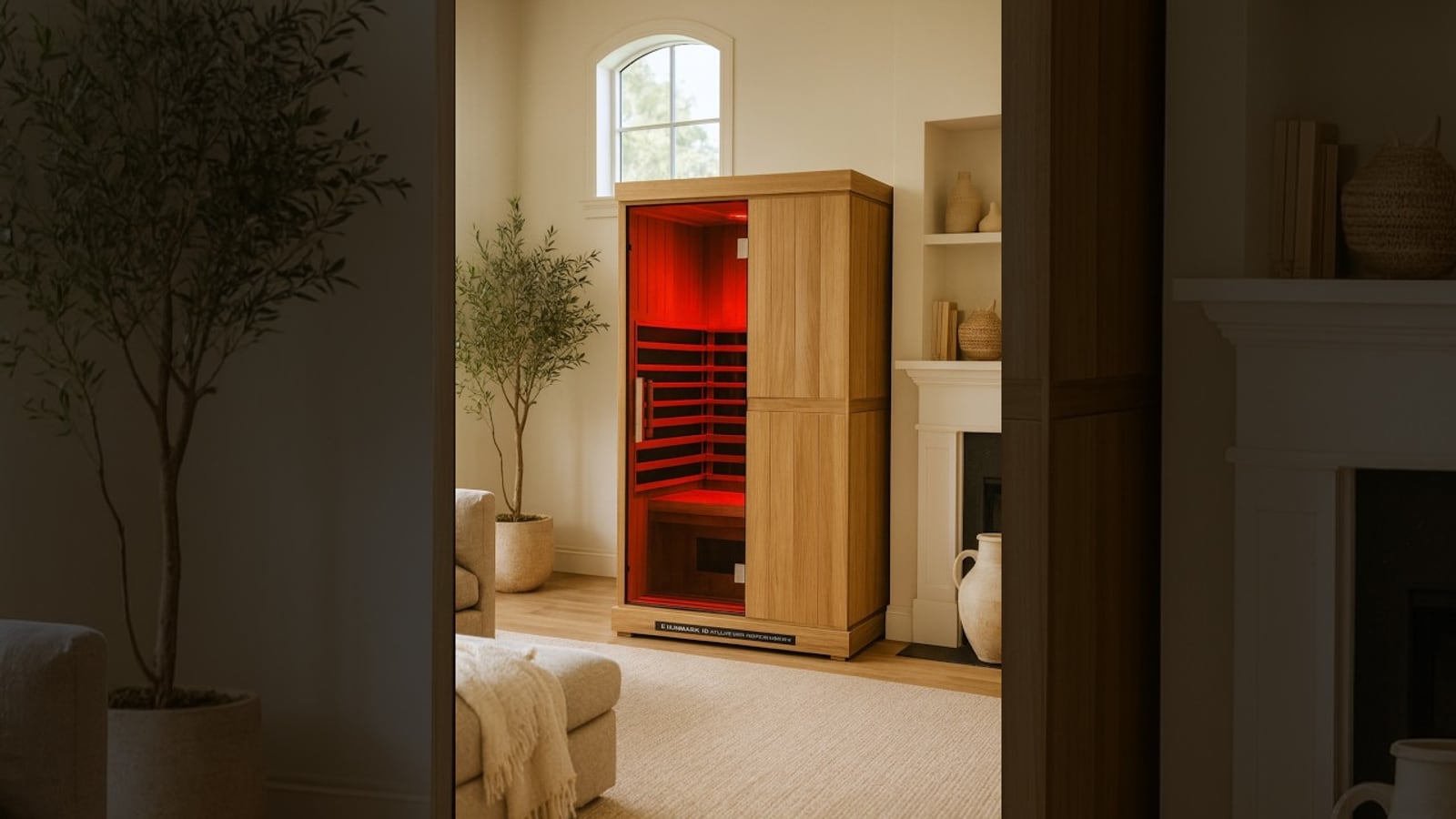
The practical difference is that infrared runs cooler, around 120-150°F against 150-195°F, which many people find easier to tolerate for longer. Whether that changes any outcome is not established.
If you want to understand the difference in experience rather than in outcomes, we wrote a full comparison: infrared vs traditional sauna.
How often, and for how long?
There is no established prescription, and anyone giving you a precise protocol is inventing it.
What we can say from how owners actually use them: most settle into two to four sessions a week, of fifteen to twenty-five minutes, often in the evening. People who bought a sauna intending daily hour-long sessions almost never sustain it.
Which brings us back to the point that runs through everything we write about buying one: the sauna that gets used is the one that is convenient, quick to heat, and close to a shower. That is a bigger factor in whether you get anything out of it than any specification.
Common questions
Does a sauna help you sleep?
Many owners report that it does, and it is an area under study. We are not going to promise it. If better sleep is your main reason for buying, be aware you are buying on a reasonable hope rather than a guarantee.
Do you burn calories in a sauna?
Your heart rate rises, so you use some energy. The figures circulated online are wildly inflated, and the weight you see on the scale afterwards is water. It is not an exercise substitute.
Is a sauna good for your skin?
You sweat, your face flushes, and many people like how their skin feels afterwards. Beyond that, be sceptical of anything specific.
How soon would I notice anything?
The relaxation is immediate. Anything else, if it comes, comes from consistency over months, not from a session.
Is infrared safer than traditional?
Neither is inherently safer. Infrared runs at a lower air temperature, which some people find more manageable. The same precautions apply to both.
Can I use a sauna every day?
Many people in Finland do. Whether you should depends on your health, and it is a question for your doctor rather than for a retailer.
Where to go from here
If you are weighing up a purchase, start with the complete home sauna buying guide, which covers size, heat, electrical and budget.
If you are choosing between types, read infrared vs traditional sauna.
If you want to see what is involved in getting one installed, we filmed it: what to expect during sauna installation.
And if you have a health condition and are unsure whether a sauna is sensible for you, ask your doctor before you ask us. We would rather lose a sale than have you find out the hard way.