Indoor vs Outdoor Saunas: An Honest Comparison
Once you have settled on the type of heat, one question remains, and it is the one that most often gets decided by the house rather than by preference.
Indoors or outdoors?
Both work. They suit different homes, different climates and different people. Here is what actually separates them.
The case for indoors
You will use it more. This is the strongest argument and it is worth taking seriously. A sauna twenty feet from your shower gets used on a Tuesday in January. One at the end of the garden, in the rain, often does not. Convenience beats intention.
It is protected. No weather, no UV on the timber, no snow to clear off the roof. Indoor cabins tend to age more slowly for the simple reason that nothing is attacking them.
The electrical run is shorter. Running 240V across a garden costs meaningfully more than running it across a basement, and the further it goes the more it costs.
It is available all year. In a Las Vegas summer or a Chicago winter, the walk to an outdoor sauna is its own obstacle.
What indoors demands from you
Ceiling height. Most cabins need around seven feet. Basements frequently do not have it, particularly under ductwork. Measure before anything else.
A delivery path. The panels have to reach the room. Narrow stairs, tight turns and standard doorways defeat more installations than any other single factor.
Floor protection and ventilation. A traditional sauna produces steam. That needs somewhere to go, and the floor beneath needs to tolerate the occasional splash.
Our indoor saunas range from a SaunaLife X2 kit at $4,990 through the Finnmark full-spectrum infrared cabins, to the Kohler C1 kit from $17,867.
The case for outdoors
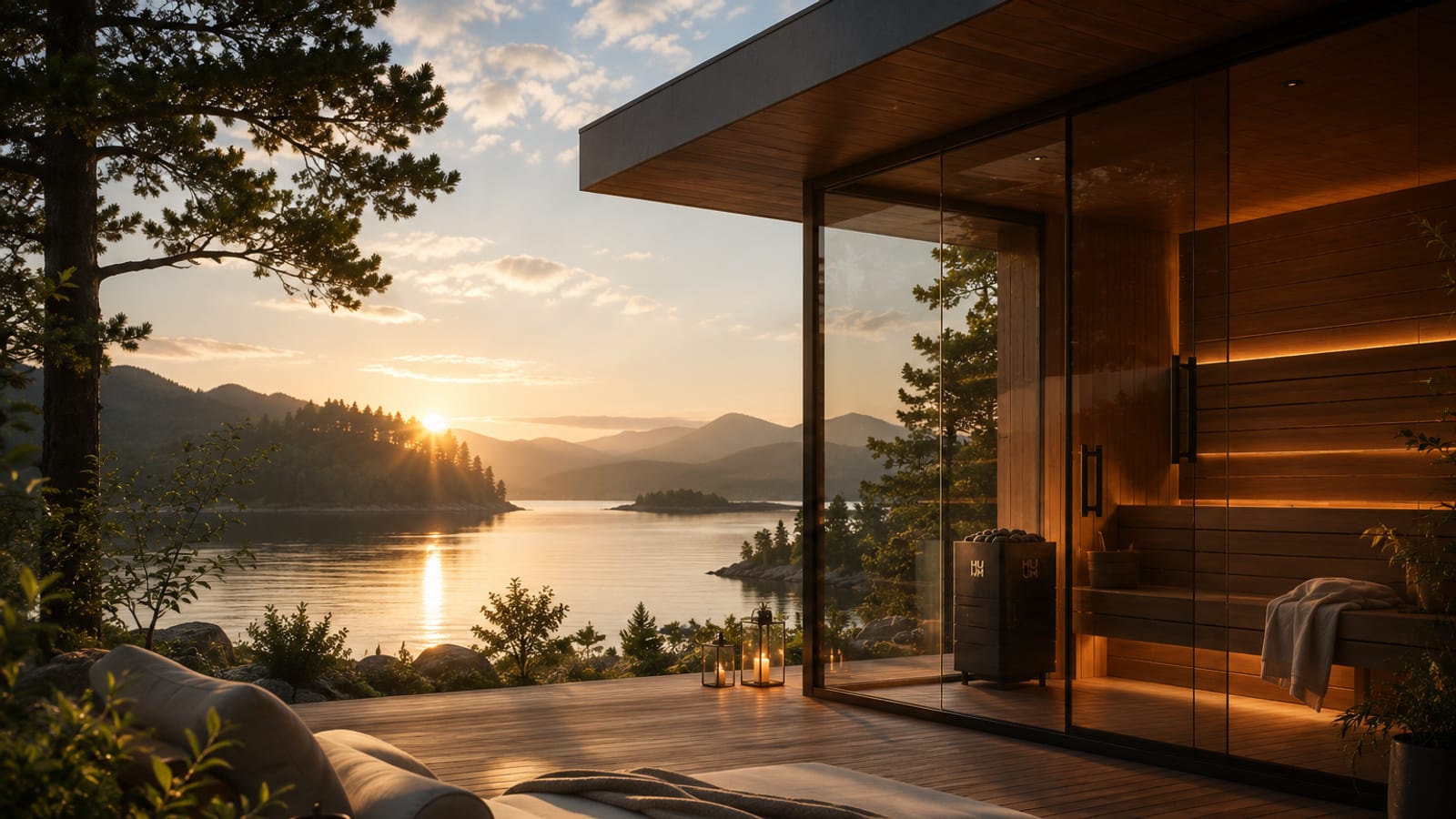
The experience is better, and it is not close. Stepping out of a hot cabin into cold air, under the sky, is the thing people describe when they talk about why they love their sauna. Indoors you step into a hallway.
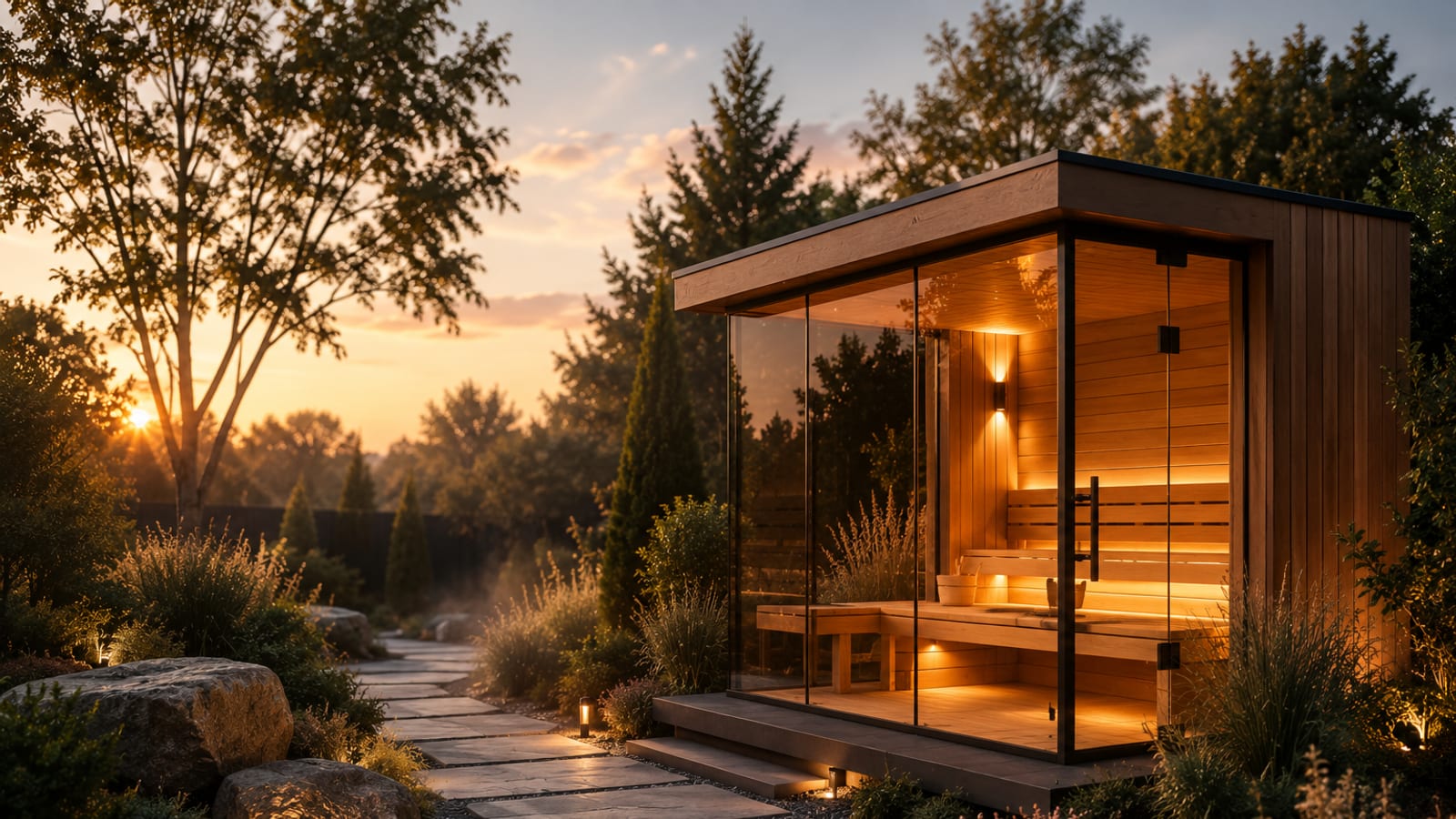
It does not cost you a room. For most households this is decisive. A spare room is worth a great deal, and a garden corner usually is not being used for anything.
Ceiling height stops being a problem. Outdoors you are not fitting into an existing envelope, so the cabin can simply be the right size.
Steam and moisture are irrelevant. No ventilation to engineer, no floor to protect, no worry about humidity finding its way into the house.
Barrel saunas are efficient. The rounded shape means less air volume to heat than a square room of the same seating capacity, and it circulates heat well.
What outdoors demands from you
A level foundation. A concrete pad, a gravel bed or a properly built deck. This is a real cost and a real piece of work, and it must be done before delivery.
An outdoor-rated electrical run. Longer, buried or conduit-protected, and more expensive than the indoor equivalent. Get it quoted early.
Weather maintenance. Depending on climate and finish, exterior timber wants attention every few years. A cover helps considerably.
The winter walk. Some people find it the best part. Others discover, in the second February, that they do not. Be honest with yourself about which you are.
Our outdoor saunas start at $4,890 for a barrel with a window and $4,990 for a compact cabin, with premium garden suites reaching $24,900. The barrel and cube kits collection is worth a look if the classic barrel shape appeals.
Cost, side by side
The cabins themselves are priced similarly. The difference lives in what surrounds them.
| Indoor | Outdoor | |
|---|---|---|
| Entry cabin | from $4,990 | from $4,890 |
| Foundation | none, but floor protection | pad or deck required |
| Electrical run | shorter, cheaper | longer, outdoor-rated |
| Ventilation | must be planned | not applicable |
| Ongoing maintenance | minimal | exterior finish, cover |
| Space cost | a room | a garden corner |
Neither is reliably cheaper once everything is counted. Indoor saves on the foundation and the electrical run. Outdoor saves you a room, and rooms are expensive.
Which shape, if you go outdoors
Barrel. The classic. Efficient, distinctive, and the least expensive way into an outdoor sauna. Ours run from $4,890 to around $7,190.
Cabin. Square, more usable interior space, easier to add a changing room. From $4,990, with a changing-room model at $7,990.
Garden suite. Larger, architectural, sometimes with a porch or shower. This is the premium end, from $14,990 to $24,900.
Your climate matters more than you think
Advice written for a Minnesota winter does not transfer to a Nevada summer, so here is the honest regional version.
Hot, dry climates. An outdoor cabin in July can sit at 120°F before you switch it on, which lengthens heat-up and shortens how pleasant the surroundings are. Shade and orientation matter enormously. Position it away from the afternoon sun and the difference is substantial. Indoors, in an air-conditioned house, sidesteps the problem entirely.
Cold winters. This is where outdoor saunas earn their reputation. The contrast between the cabin and the air outside is the entire point, and nothing indoors reproduces it. Budget for a slightly longer heat-up in deep cold, and clear the path so you are not wading through snow in bare feet.
Wet or coastal climates. Moisture and salt air are hard on exterior timber. Thermally modified aspen handles it better than most, a cover is not optional, and you should expect to refinish more often than a manufacturer in a dry state suggests.
Anywhere with real seasons. Ask yourself which four months of the year you would skip. If the honest answer is more than two, indoors will get more use.
How long installation actually takes
Buyers routinely underestimate this, and it is worth planning around.
Indoors, the sequence is: measure and confirm the delivery path, book the electrician, take delivery, assemble, then have the electrician make the final connection. Assembly on a kit is typically a weekend for two people. The electrical work is usually a day. The waiting is mostly for scheduling, not labour.
Outdoors, add the foundation. A gravel bed can be done in a weekend. A concrete pad needs to be poured and then left to cure, commonly several days to a week before anything is placed on it. This has to happen before delivery, not after, which means starting three to four weeks ahead of when you want to use the sauna.
The single most common delay is discovering the electrical requirement late. Book that quote first, before the cabin is ordered.
A shortcut for the undecided
Answer these four honestly:
- Do you have a room with seven-foot ceilings you can genuinely give up? No means outdoors.
- Will the panels physically fit through the route to that room? No means outdoors.
- Do you live somewhere with a real winter or a brutal summer? Yes tilts toward indoors, unless the contrast is exactly what you want.
- Is the ritual of stepping outside part of why you want a sauna? Yes means outdoors, and no amount of convenience will replace it.
Most people know their answer by question two. The house tends to decide.
Common questions
Can an outdoor sauna be used all year?
Yes. They are built for it. Expect a somewhat longer heat-up in deep cold, and keep the path to the door clear.
Do outdoor saunas need planning permission?
Rules vary by city and county. Many jurisdictions treat a small freestanding structure as exempt, but setback distances from property lines, and any permanent electrical work, frequently do require a permit. Call your local building department before you order. It is a five-minute phone call that occasionally saves a very expensive mistake.
What ceiling height does an indoor sauna need?
Around seven feet for most cabins. Measure to the lowest obstruction, not the highest point, because ductwork and beams are what actually stop an installation.
Can I put a sauna in my garage?
Often the best answer of all. Garages usually have the height, the floor, the electrical panel nearby, and the space, and you are not giving up a living room. Ventilation still needs thinking about, particularly for a traditional sauna.
Does an outdoor sauna need a concrete pad?
Not always. It needs a level, stable, well-draining base. A compacted gravel bed or a properly built deck rated for the weight both work. What it must not sit on is bare soil or grass.
How long does an outdoor sauna last?
With a cover and periodic attention to the exterior finish, well over a decade. Neglected in a wet climate, considerably less. The interior almost always outlives the exterior.
Next
Still weighing heat types? Read infrared vs traditional sauna.
Want the whole decision in one place, including budget and electrical? Start with the complete home sauna buying guide.
And if you would rather just describe your space to a person, get in touch. Room dimensions, ceiling height and where your electrical panel sits are usually enough for us to tell you what will work.